
In the June quarter of 2024-2025, smartphone exports hit $2 billion, well ahead of non-industrial diamond exports, which stood at $1.44 billion.

From the Sensex pack, Larsen & Toubro jumped 4.26 per cent to emerge as the biggest gainer, followed by IndusInd Bank, Tech Mahindra, State Bank of India, HCL Technologies, Power Grid, NTPC, Axis Bank, Kotak Mahindra Bank, HDFC Bank and Wipro. Mahindra & Mahindra, Infosys, UltraTech Cement and Hindustan Unilever were the major laggards.

Benchmark indices faced severe drubbing on Friday, with the Sensex and Nifty falling nearly 2 per cent each amid feeble global market trends. Foreign fund outflows and fears of recession in the global economy have dented investor sentiments. Falling for the third day in a row, the 30-share BSE Sensex tanked 1,093.22 points or 1.82 per cent to settle at 58,840.79.

India's inclusion in JP Morgan's bond index can channel billions of dollars into India. How will the government securities market handle it?

Sensex ended strong, Tata Steel, HUL climb higher.

Benchmark indices Sensex and Nifty bounced back on Tuesday to close over 2 per cent higher amid positive trends in global equity markets. The 30-share BSE Sensex spurted 1,276.66 points or 2.25 per cent to settle at 58,065.47. During the day, it zoomed 1,311.13 points or 2.30 per cent to 58,099.94. The broader NSE Nifty rallied 386.95 points or 2.29 per cent to end at 17,274.30.

From the Sensex pack, ITC, Titan, Asian Paints, Reliance, Tata Steel, Bajaj Finserv, Axis Bank, Hindustan Unilever, Infosys, Bajaj Finance, Nestle and ICICI Bank were the major gainers. Kotak Mahindra Bank, Mahindra & Mahindra, HCL Technologies, State Bank of India, Bharti Airtel and Tata Motors were among the laggards.

Benchmark stock indices Sensex and Nifty cut short their four-day gaining streak to close lower by half a per cent on Wednesday due to profit-taking in banking oil and metal stocks amid weak trends in global markets.

Billionaire Mukesh Ambani's Reliance Industries Ltd climbed eight spots to the 45th rank, the highest for an Indian company on Forbes' latest Global 2000 list of public companies worldwide.

Among the 30 Sensex firms, Tata Motors jumped over 4 per cent, followed by Bajaj Finserv, Bajaj Finance, HCL Technologies, ITC, Reliance Industries, Tech Mahindra, Maruti and State Bank of India. Reliance Industries climbed nearly 2 per cent after Mukesh Ambani, chairman and managing director of the firm, said the board of the company will meet on September 5 to consider issuing bonus shares in the ratio of 1:1.

The Russia-Ukraine conflict, which has spooked financial markets globally, will set the tone for Dalal Street this week amid concerns over energy prices and foreign fund outflows, analysts said. Participants will also track key macroeconomic signals like GDP estimates and PMI data for manufacturing and services sectors to be announced this week, they added. "With earnings season behind us and given the overall sentiments, markets are expected to move in sync with global peers in the coming week. "A close eye will be kept on the developments concerning the Russia - Ukraine crisis and considering the inflation overhang, market participants will also observe movements in energy prices," said Shrikant Chouhan, Head of Equity Research (Retail), Kotak Securities Ltd.
NSE Nifty ended at 5,567, down 14 points.

Rating agency Fitch on Tuesday downgraded the US government's top credit rating to AA+ from AAA, citing fiscal deterioration over the next three years and repeated debt ceiling negotiations. The development caused a flutter across equity markets, with most leading frontline global equity indices trading weak. Back home, the S&P BSE Sensex and the Nifty50 lost over 1 per cent each in intra-day deals to hit a low of 65,751.53 and 19,517.55 levels, respectively.

Bajaj Finance was the top gainer in the Sensex pack, rising around 3 per cent, followed by Bharti Airtel, Sun Pharma, Reliance Industries and SBI. NSE Nifty advanced 184.60 points to 16,955.45.

Traders said apart from increased buying by jewellers and retailers to meet seasonal demand, a firming trend in global markets on increased tensions in Ukraine and weakening dollar mainly influenced precious metal prices.

Equity benchmark index Sensex buckled under selling pressure for the second straight session to close below the 65k mark on Friday, as investors offloaded IT, teck and metal stocks amid a bearish global trend. Besides, fresh foreign fund outflows also hit investor sentiments, traders said. In a volatile trade, the 30-share BSE Sensex declined 202.36 points or 0.31 per cent to settle at 64,948.66.

The growth momentum in India's manufacturing sector was maintained in February, with new orders and output increasing at similar rates to January, according to a monthly survey. The seasonally adjusted S&P Global India Manufacturing Purchasing Managers' Index (PMI) was at 55.3 in February, little-changed from 55.4 in January. The February PMI data pointed to an improvement in overall operating conditions for the 20th straight month. In PMI parlance, a print above 50 means expansion while a score below 50 indicates contraction.

Market selloff erodes nearly Rs 12 lakh crore of investor wealth. On the BSE, 1,279 scrips declined, while 193 advanced and 40 remained unchanged.

Pratham Barot, CEO and co-founder, Zell Education, explains how specialised courses in finance can help you earn a cushy six-figure salary.

Top losers in the session included Maruti, Tata Motors, RIL, Yes Bank, Adani Ports, Bharti Airtel, Asian Paints, ONGC, HUL, Kotak Bank, IndusInd Bank and Axis Bank, falling up to 5 per cent.

The ownership by domestic investors, individual as well as institutional, in companies listed on the National Stock Exchange (NSE) has breached the 25 per cent mark for the first time. The share stood at 25.72 per cent at the end of the March 2023 quarter, up from 24.44 per cent in the previous quarter, according to data from Prime Database. The share of foreign portfolio investors (FPIs), meanwhile, rose slightly to 20.56 per cent from 20.24 per cent as on December 31, 2022.

Benchmark BSE Sensex rose by about 322 points to close above the 60,000 level on Monday tracking gains in banking, IT and energy stocks amid positive global equities. The 30-share barometer closed higher by 321.99 pts or 0.54 per cent at a three-week high of 60,115.13, as 21 of the index constituents closed in the green. After a strong opening, the index touched a day's high of 60,284.55 and a low of 59,912.29.

The Sensex ended over 51 points lower on Monday while the Nifty settled flat amid a weak trend in global markets and continuous foreign fund outflows. Markets are awaiting the November inflation data to be announced later in the day, traders said. The 30-share BSE Sensex declined 51.10 points or 0.08 per cent to settle at 62,130.57. During the day, it tumbled 505.52 points or 0.81 per cent to 61,676.15. The broader NSE Nifty ended at 18,497.15, marginally higher by 0.55 points.
Equity indices fell on Thursday, mirroring weak global market trends following the US Federal Reserve's interest rate hike and hawkish stance. The 30-share BSE Sensex declined 337.06 points or 0.57 per cent to settle at 59,119.72. During the day, it tanked 624 points or 1.04 per cent to 58,832.78. The NSE Nifty went lower by 88.55 points or 0.50 per cent to end at 17,629.80.

Equity benchmarks continued their winning momentum for the third day on Thursday and jumped over 1.50 per cent, tracking an overall bullish trend in Asian equities. On the political front, the BJP headed for a second straight win in politically crucial Uttar Pradesh and dominated the trends chart in three other states. The 30-share BSE benchmark Sensex opened in the green and further zoomed 1,595.14 points or 2.91 per cent to 56,242.47 during early trade.

Investor wealth worth over Rs 13.44 lakh crore was wiped off on Thursday as the domestic equity markets tumbled along with global risk assets, after Russia launched military operations against Ukraine. Amid intensifying rout in the global financial markets, the 30-share BSE Sensex plummeted 2,702.15 points or 4.72 per cent to end at 54,529.91. The carnage on Dalal Street eroded investor wealth worth Rs 13,44,488.54 crore, taking the total market capitalisation (m-cap) to Rs 2,42,24,179.79 crore on the BSE.

After a successful tie up in traditional ICE and strong hybrid models, Suzuki and Toyota are now set to take their partnership to the next level: the electric vehicle segment. Both the Japanese auto giants recently announced a plan to produce Suzuki eVX-based SUV which will be sold under Toyota brand across the globe. This electric SUV, bearing Toyota's logo, will go for production at Suzuki Motor Group (SMG) facility in Hansalpur, Gujarat beginning the spring of 2025, marking the first EV launch for both companies in India.

M&M was the top loser in the Sensex pack, skidding 3.31 per cent, followed by Reliance Industries, Bajaj Finserv, ICICI Bank, Maruti, Tata Motors and Tech Mahindra. On the other hand, Tata Steel, L&T, Axis Bank, Bharti Airtel and HDFC Bank were among the gainers.

Mutual funds (MFs) are likely to surpass foreign portfolio investors (FPIs) in terms of anchor investments in initial public offerings (IPOs) for the second consecutive year. In calendar year 2023 so far, MFs have invested Rs 5,577 crore as anchor investors, compared to the Rs 5,417 crore invested by FPIs this year. In 2022, MFs put in Rs 9,026 crore as anchor investment, 21 per cent higher than the FPI tally of Rs 7,105 crore. This marked the first time since 2014 that MFs had outpaced FPIs in anchor investments.

Bajaj Finserv, Infosys, Mahindra & Mahindra, Tech Mahindra, Hindustan Unilever, State Bank of India and HCL Technologies were the biggest gainers. On the contrary, Asian Paints, JSW Steel, NTPC and Adani Ports were among the laggards.

BSE benchmark Sensex plummeted 778 points to close below the 55,500-level on Wednesday following a broad-based selloff in global markets as the Russia-Ukraine crisis escalated. The 30-share BSE index ended 778.38 points or 1.38 per cent lower at 55,468.90. Similarly, the NSE Nifty plunged 187.95 points or 1.12 per cent to 16,605.95.
Tata Motors, Power Grid, Larsen and Toubro, Kotak Mahindra Bank, NTPC, Titan and UltraTech Cement were the other major gainers. ITC, Infosys, JSW Steel, Tech Mahindra and Tata Consultancy Services were the laggards.

Among the Sensex firms, JSW Steel, Tata Steel, Tech Mahindra, Infosys, Wipro, Tata Consultancy Services, Nestle, HCL Technologies, HDFC Bank and Maruti were the major laggards. IndusInd Bank, ITC, Bharti Airtel and State Bank of India were among the winners.

Benchmark BSE Sensex rose by 319 points on Monday on gains in IT and financial stocks after positive quarterly results amid supportive global cues. The 30-share BSE barometer rose by 319.90 or 0.53 per cent to close at 60,941.67. The index opened higher and gained more than 400 points to scale the 61,000 level. It touched a high of 61,113.27 and a low of 60,761.88 in the day.

ITC was the top gainer in the Sensex pack, rising around 3 per cent, followed by HDFC Bank, PowerGrid, ICICI Bank, IndusInd Bank and NTPC. Nifty surged 176.80 points to a new lifetime closing high of 18,338.55.

Silver also recovered by Rs 250 to Rs 37,300 per kg.

As the Indian equities signed off 2019 on a remarkable note, the m-cap of BSE-listed companies rose by Rs 11,05,363.35 crore to Rs 1,55,53,829.04 crore.

For Indian parents, sending a child abroad for a three-year degree could deplete 48% of their retirement savings, while a four-year degree may consume up to 64%.

Listing out priorities for the Finance Ministry under Arun Jaitley and the Narendra Modi government as a whole, it said the growth rate can pick up to 6 per cent with the extent and pace of reform measures.
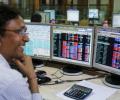
Among the Sensex firms, Wipro jumped over 6 per cent, the most among the frontline companies. HCL Technologies, Tata Motors, Maruti, Tata Steel, Infosys, Tech Mahindra, Larsen & Toubro and JSW Steel were the other major winners. State Bank of India, Bajaj Finance, ICICI Bank, HDFC Bank, Axis Bank and IndusInd Bank were among the laggards.
